

Book Presentation 'The Colonate in the Roman Empire'
Similar events
International Conference ‘Olfactory knowledge: Learning through smell from the 18th century to the present day’
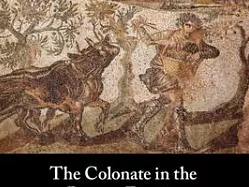
With author Boudewijn Sirks (All Souls College)
Discussants: Bryan Ward-Perkins (Trinity College, Oxford) and Yann Rivière (EHESS, Paris)
Convenor: Soazick Kerneis (MFO)
To attend this event, please register here
Summary of the book
In the fourth and fifth century there are people in the Roman empire who are bound to a particular estate in the sense that the estate owner can recall them and impose services. Their status, called the colonate, is low. Often it is assumed to have been widespread or even a general feature of a general change in agricultural exploitation. Various theories about its cause have been formulated: chronic indebtedness of farmers, fiscal reorganisations, emergence of large estates. However, already in the middle of the third century in Egypt a similar but private law contract existed, the paramonè. The insertion into the census of an estate under Diocletian gave it a public law aspect, making the estate owner now the contract partner. It implied a change in status for the colonus. It was consequently never a general phenomenon.