

Talk ‘From the formation of anthrôpos in ancient Greece to its contemporary dissolution’
As part of the 'Inhabiting the World in the Age of the Anthropocene' Lecture Series
©ReseauMollat
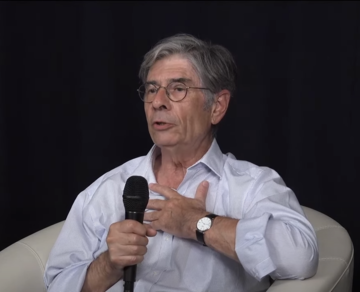
François Hartog (EHESS)
Chair: Beate Dignas (Somerville College)
To create, say the great founding texts, is to distinguish and draw a line: between mortals and immortals, between humans and beasts, between an eternal God and ephemeral beings, between a perishable body and an immortal soul…
We will discover this initial act at work in two places: in Greece, with the formation of an anthrôpos, and in Rome, with the definition of a homo humanus. Then, without transition (for the purposes of this lecture), we will move from these ancient historical figures of the human to a brief overview of the many contemporary challenges to the very essence of what it means to be a human.
Let us not see in this abbreviation any teleology (the end was already in the beginning), but rather the desire to show that today’s uncertainties are part of a long history of European culture and that, from a confrontation with the past, a better understanding of the present can emerge.
François Hartog is a French historian and a member of the École des Hautes Études en Sciences Sociales (EHESS), where he is affiliated with the Modern Historiographies research group. After studying at the École Normale Supérieure in Paris, where he developed an interest in Hellenism, he worked under the supervision of the French anthropologist Jean-Pierre Vernant and the German historian Reinhart Koselleck.
His research has focused both on the history of ancient Greece and on the nature of history as an intellectual and social practice. His studies of the classical world include The Mirror of Herodotus (1988; English trans. 2009) and Memories of Odysseus (2001), while Évidence de l’histoire (2005) and Regimes of Historicity (2016) stem from his broader reflections on historical time.

