

Lecture 'Strings and Knots: Enlightened Quipus' by Roger Chartier
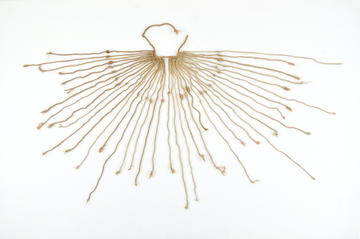
Quipus, Penn Museum
Françoise de Graffigny’s Lettres d’une Péruvienne printed in 1747 and reprinted with some additions in 1752, was a great success with several sequels, immediate translations, and theatrical adaptations. The first seventeen letters written by Zilia, daughter of the Sun, to the prince Inca Aza, were supposedly composed with the threads and knots of Peruvian quiipus, before Zilia learned to write in French. During a time of an “Inca fever” in France, begun by Rameau and Voltaire, Graffigny’s fiction fascinated critics and readers. Could Zilia express ideas and sentiments with threads and knots? Were quipus actually Inca letters? This seminar will examine the contradictory answers to these questions, from Raimondo de Sangro to the Encyclopédie. It will also focus on the information about the quipus available in eighteenth-century France and Europe thanks to the translations and readings of the chronicles of the Conquest and, in particular, Garcilaso de la Vega’s Commentarios Reales. It will be also a contribution to the historical reflection about non-alphabetic writings and non-phonetic scripts.
Roger Chartier, born in Lyon in 1945, was a lecturer and director of studies at theÉcoledes hautes études en sciences sociales between 1976 and 2007. He was Professor at the Collège de France between 2007 and 2026. He is currently Visiting Professor at the University of Pennsylvania during each spring term. He regularly teaches for short periods in Brazil and Mexico (among other countries). He is a regular contributor to Le Monde des Livres.
His most recent publications are Editer et traduire, Gallimard, Seuil and Écoledes hautes études en sciences sociales, 2021 ; Won in Translation, University of Pennsylvania Press, 2021, and Cartes et fictions, TheCollège de France Publishing Department, 2022.

