

Call for Paper 'Olfactory knowledge: Learning through smell from the 18th century to the present day'
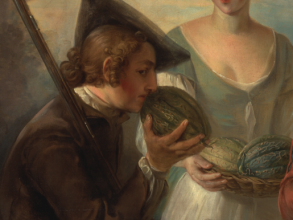
Conference to be held at MFO on 22 & 23 October 2026
Proposals for papers in French or English before April 15, 2026
(Download the CfP in French here, and the English version here)
Organisers:
Rémi Digonnet, Jean Monnet University of Saint-Étienne / ECLLA
Judith Rainhorn, Paris 1 Panthéon Sorbonne / CHS
Marie Thébaud-Sorger, CNRS / CAK
Érika Wicky, Grenoble-Alpes University / LARHRA
According to Condillac, smell is "of all the senses, the one that seems to contribute least to the knowledge of the human mind" (1754; Jaquet, 2010). This perception is well grounded in language as illustrated by the French expression flair, a favored metaphor for approximate or intuitive knowledge. Such a popular belief will be questioned during this interdisciplinary conference by testing it against uses and practices through the study of the objectification of olfactory knowledge since the 18th century, whether it be expressed through texts (treatises, books, formulas, etc.), images (illustrations, photographs, paintings, etc.) or objects (olfactometers, etc.).
Beyond the knowledge necessary for survival (air and food quality) and the social stereotypes conveyed by olfaction (Hsu, 2020; Corbin, 1982), olfactory knowledge is an integral part of many scholarly, medical, artisanal, and domestic practices. Although the use of smell has been questioned since the end of the modern period (Roberts, 1995), the objectification of the senses through instrumentation has not completely eliminated the use of organoleptic expertise and olfactory assessments (Kiechle, 2017). For example, these have continued to play a key role in the characterization of materials, the classification of plant and fungal species, and even the development of medical diagnoses. In the field of crafts, olfaction is most often tacit knowledge, but documents such as technical treatises remind us that smell has also often been used to indicate adulterated materials or advanced chemical transformation processes. At the same time, the emergence of synthetic raw materials, which encouraged creativity in perfumery (Briot, 2015), paved the way for the formulation of aesthetic judgments based on smell (Jaquet, 2015).
Since the 20th century, perfumers and oenologists have reinforced the idea of olfactory expertise, which has become institutionalized. Schools that emerged in the mid-20th century have enabled the implementation of sensory teaching methods such as the Jean Carles method, whose comparative approach to raw materials remains a major component of perfumery training. Alongside this expertise, other professions have continued to rely on the sense of smell, such as doctors or firemen (Candau, 2010). Today, several associations train citizens to recognize pollutants so that they can report them and better protect themselves. From a hedonistic perspective, numerous training courses are also offered to non-professionals who wish to develop their sense of smell in order to better appreciate wines, spices, coffees, or perfumes. Most museums now use olfactory reconstructions and immersive devices for sensory education based on emotions.
There is therefore no clear chronological break in terms of duration, nor any exclusion between tacit and prescriptive knowledge. On the contrary, the uses of smell invite us to reconsider these relationships and their multiple combinations: by refocusing attention on the observation of the uses of olfactory knowledge in multiple contexts, this multidisciplinary conference will allow us to reconsider the status of this sense, considered inferior in the general economy of knowledge since the "olfactory revolution" identified in the 18th century (Corbin, 1982) to the most recent advances in neuroscience.
This international conference aims to stimulate collective interdisciplinary reflection and is open to all disciplines in the arts, humanities, and social sciences, as well as specialists in medicine, chemistry, architecture, etc. We welcome contributions from young researchers and established specialists in their fields. Proposals for papers in French or English, approximately 3,000 characters in length, accompanied by a short bio-bibliography, should be sent to Rémi Digonnet (remi.digonnet@univ-st-etienne.fr) and Érika Wicky (erika.wicky@univ-grenoble-alpes.fr) before April 15, 2026.
This international symposium is organized by the Junior Professorship Chair "Olfactions" (University of Grenoble-Alpes / LARHRA). It will be hosted by the Maison française d'Oxford (CNRS). It is supported by the Alexandre Koyré Center (CNRS/EHESS/MNHN, Paris), the ECLLA research laboratory (Jean Monnet University of Saint-Etienne), the Health-SHS Chair of Paris 1 Panthéon Sorbonne, and the Institut Universitaire de France. Contributors's travel and accommodation expenses will be covered.